
When writing, it's always important to consider how a reader may think about a detail you present. How will the reader put that detail into context at any point in the story? What will it make them think or feel?
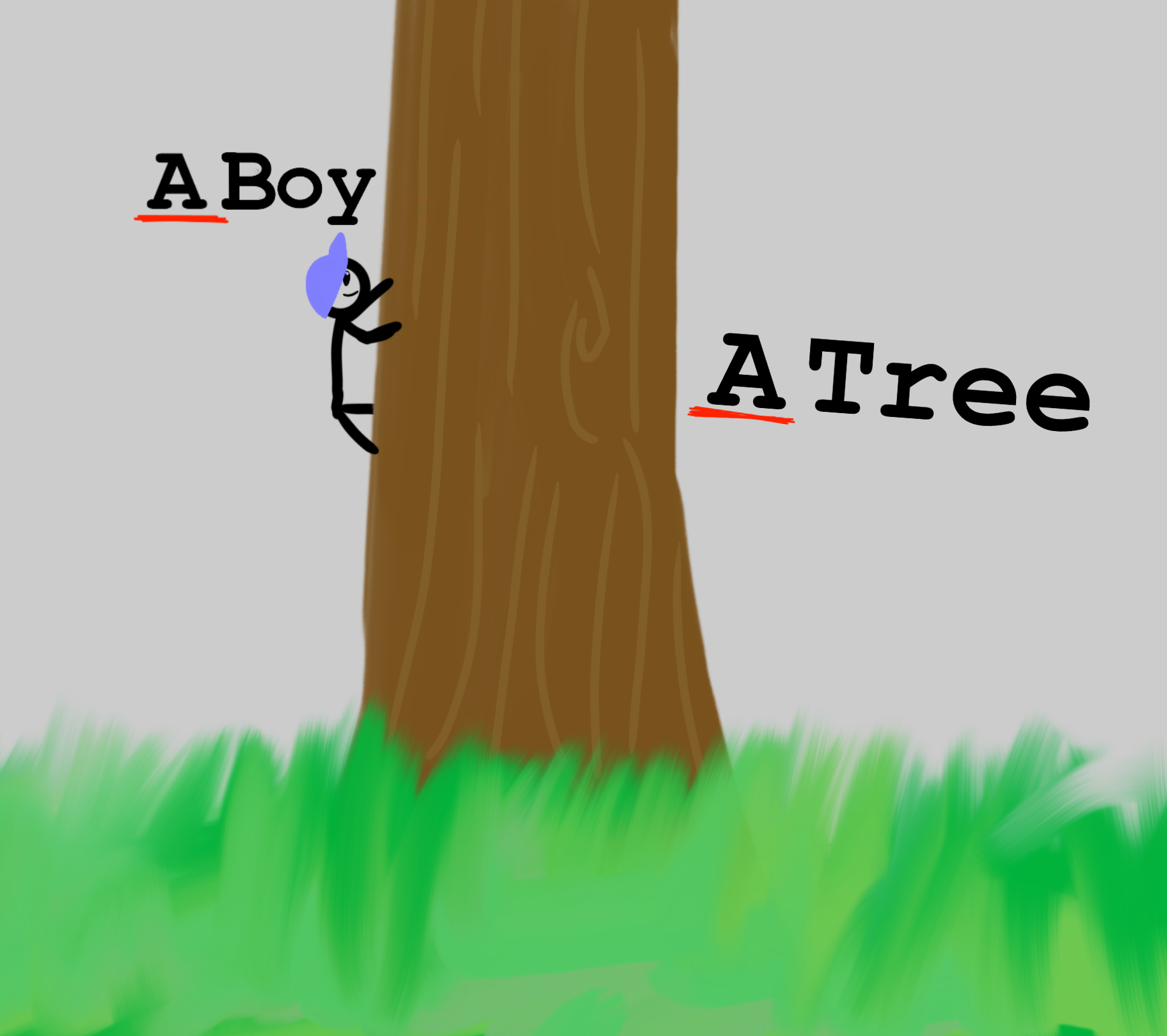
A great way to do so is through well-thought-out word choice. When a detail (aka a noun) is being introduced, it's common to use an article to introduce it. Often this takes the form of the words "the" and "a/an". These articles have specific uses depending on whether the information is new to the reader or if it has already been introduced. Starting with the phrase "A boy climbed up a tree" introduces both the boy and the tree as new information.
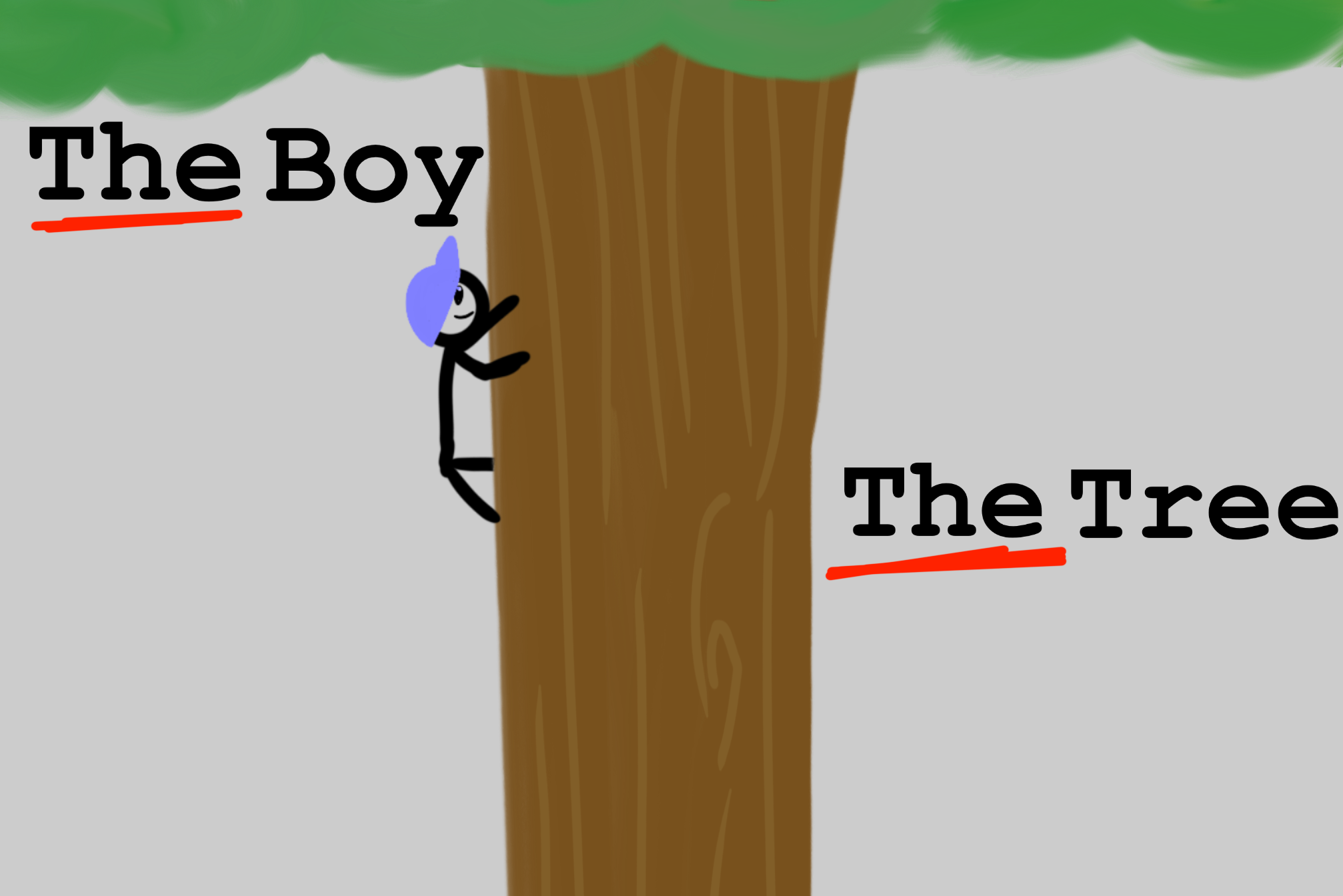
So from then on, you would switch to the phrasing, “The boy continued his climb up the tree”. because now both the boy and the tree are familiar details. You already know them. These are known as: indefinite articles (new information where a/an is used) and definite articles (old information where the is used)
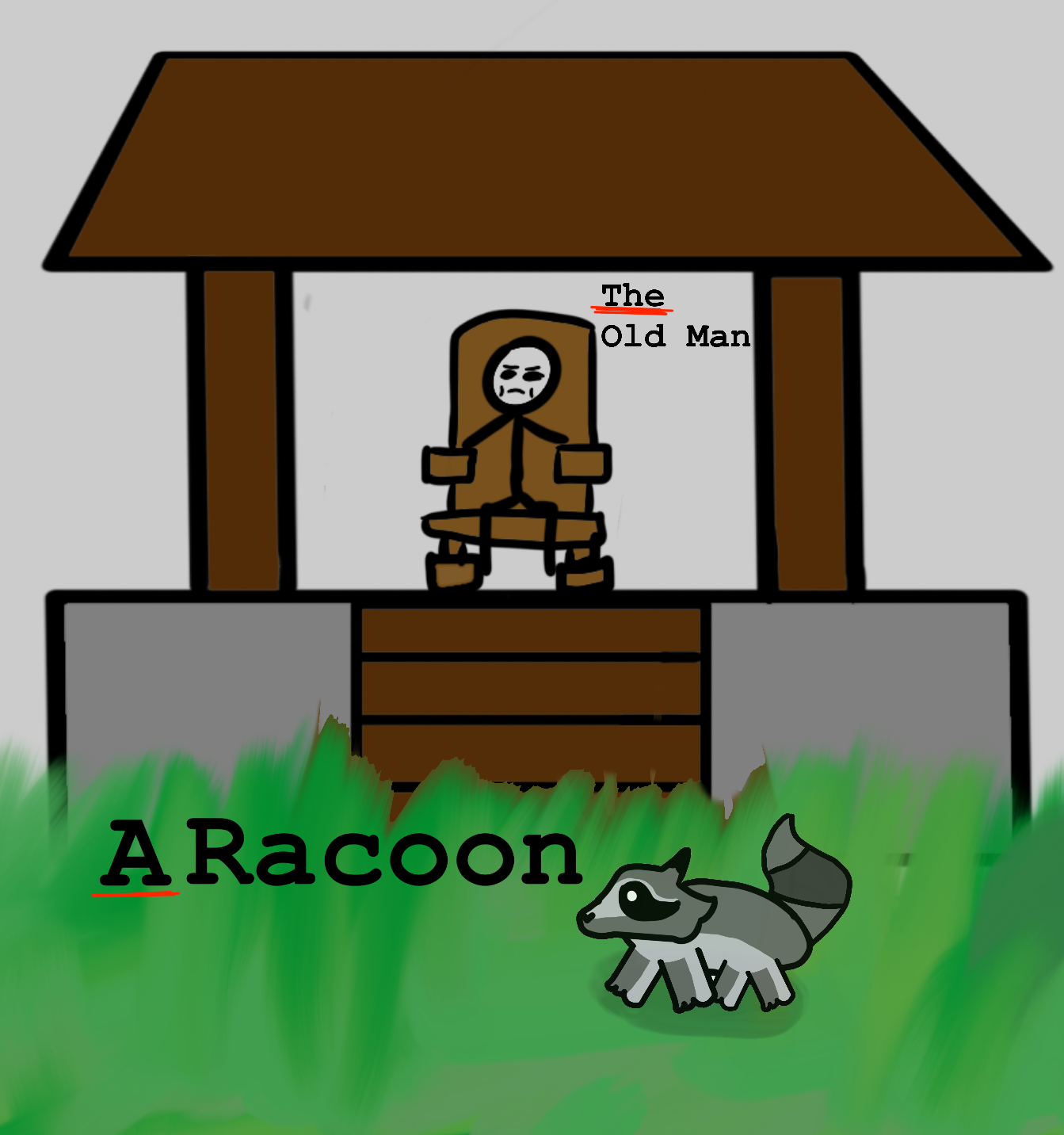
Along with that, these articles can be used to insert the feelings assigned to new or familiar details. For instance, starting with “The old man sat on his rickety rocking chair on the cabin porch as a raccoon scampered by” implies that the cabin and the man are both familiar points, but the raccoon, however, is a new and unfamiliar point. Despite everything about the sentence being new, having the other details as fixed points makes us understand that the Racoon is comparatively new and surprising.
Now for some practice, because practice makes better!
Use this generator to pick and object, or two! The more the better. Once you have your object(s), write a sentence about them. Are they new or familiar? What scene comes to life around them? If you did more than one item, how does having them together make each one feel? You may find one to feel more familiar than the other, thus it may end up with the definite article.
It's a simple trick to be sure, but simple certainly doesn't mean useless. Have a great day, writers!